Unlock Your Pelvis: Physical Therapy Tips to Progress Labor
Labor is an incredible journey, and preparing your body ahead of time can make a big difference in comfort and mobility during each stage.
As baby travels through the 3 levels of the pelvis, there are ways to make sure there is the maximum available space, which will make it easier for baby to travel through.
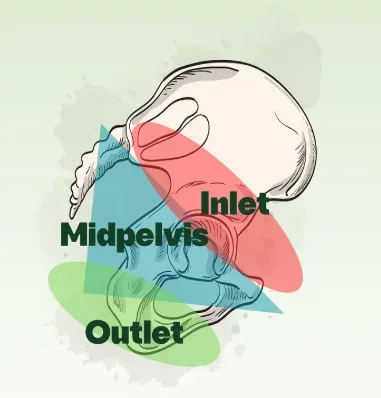
Physical therapy techniques, gentle exercises, hip mobility, and strategic positioning can help open the pelvis at different levels and support your baby’s descent.
We highly recommend practicing different positions during your pregnancy so you are familiar with your options during labor.
1. Opening the Top of the Pelvis (Early Labor)
During early labor, the goal is to encourage your baby to engage and settle into the pelvis. Positions with wide knees can be especially helpful.
Examples:
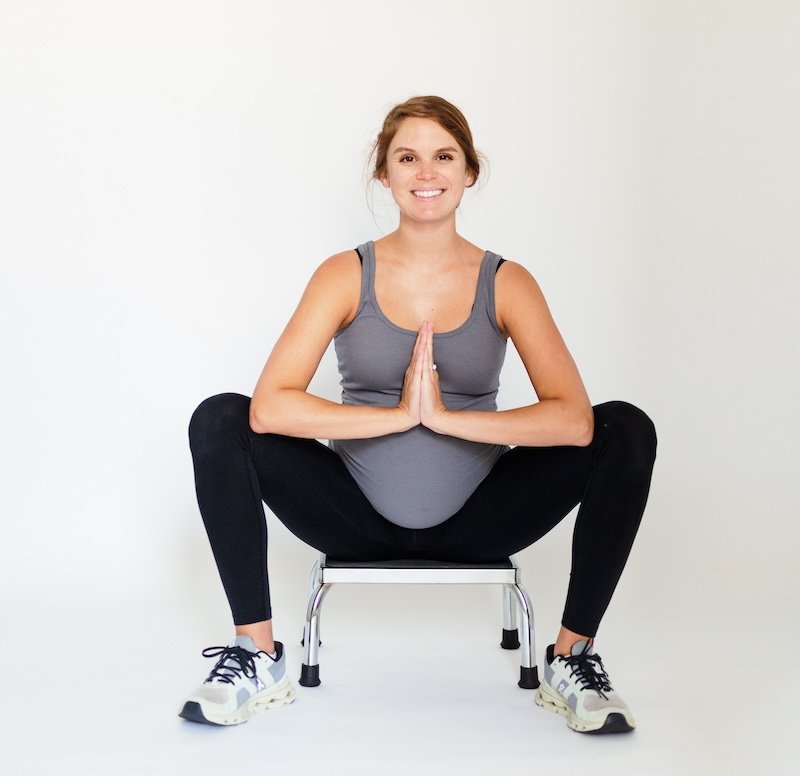
Deep Squats: These can be done seated on a small stool, holding on to the kitchen sink or chair arm, freestanding squat, holding on to your partner, or using a birth sling. There is no one right option!
Cat/Cow: Performed with knees wide
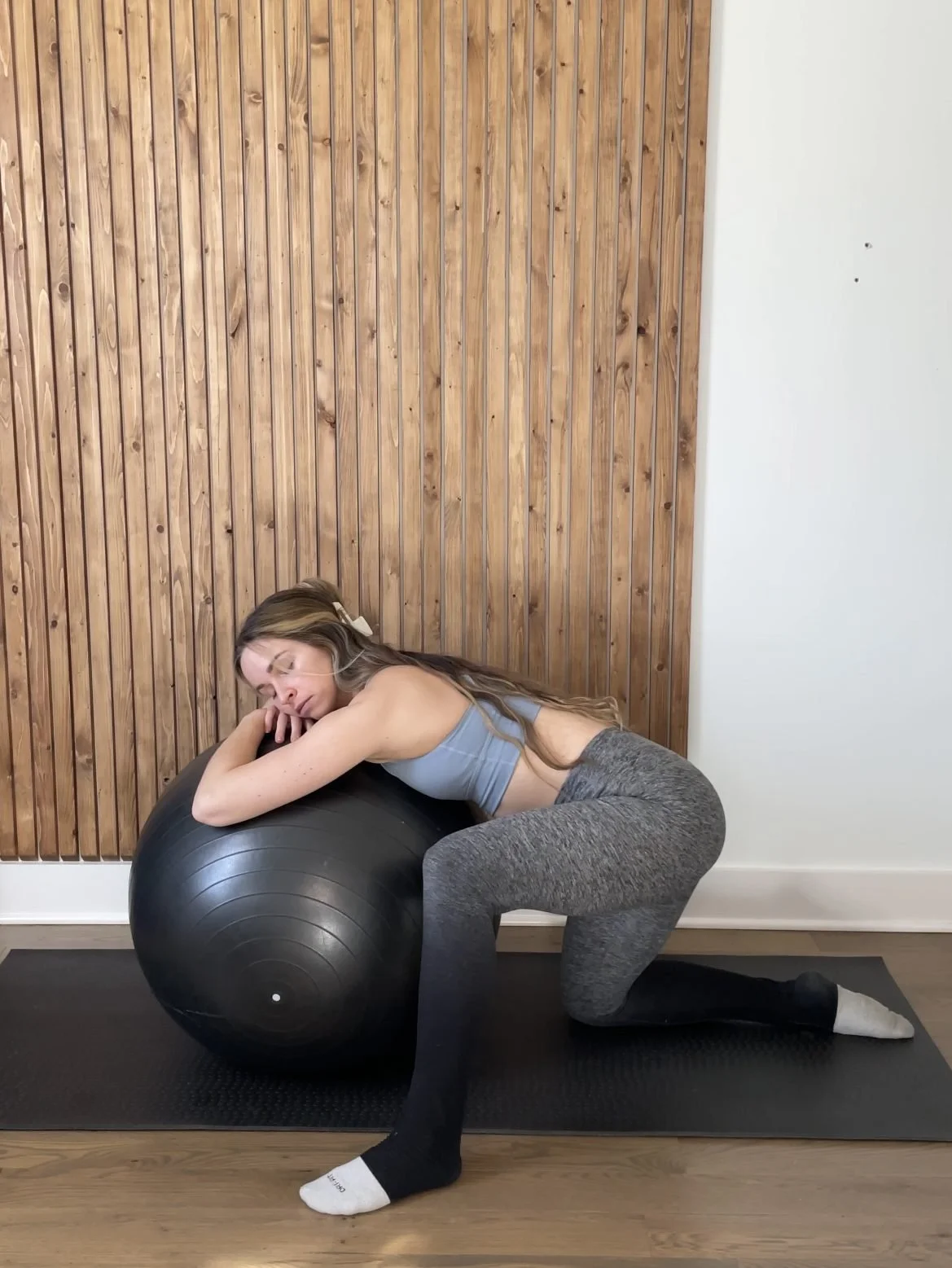
Rocking in/out of Child’s Pose: Performed with knees wide; resting your upper body/arms on a large ball can make it more comfortable.
Pelvic tilts on a birthing ball: Sit on a large ball and gently tilt the pelvis forward and back
2. Opening the Middle of the Pelvis (Middle Labor)
As labor progresses, your baby moves through the midpelvis. Asymmetric positions where one leg is doing something different than the opposite side can help encourage maximal space in the midpelvis.
Optional movements:
Forward kneeling lunges: with gentle rocking or side kneeling lunges rocking in/out (ball support optional) x 10 each side
Standing with one foot up on a stool, hands resting on the bed
Cat/Cow with one knee on a yoga block: can be static or hip shift lowering the opposite knee up/down x 10 each side
Sitting on a large ball: rocking side to side, or making gentle circles with the hips x 10 each direction
Dynamic walking: Curb walking or walking sideways up the stairs can encourage midpelvis mobility.
3. Opening the Bottom of the Pelvis (Late Labor)
In the final stage, the focus shifts to the bottom or the “outlet” of the pelvis to help the baby descend and prepare for birth. Narrower knees with wider feet can work well.
Suggested movements:
Cat/Cow: with knees closer together and feet wider
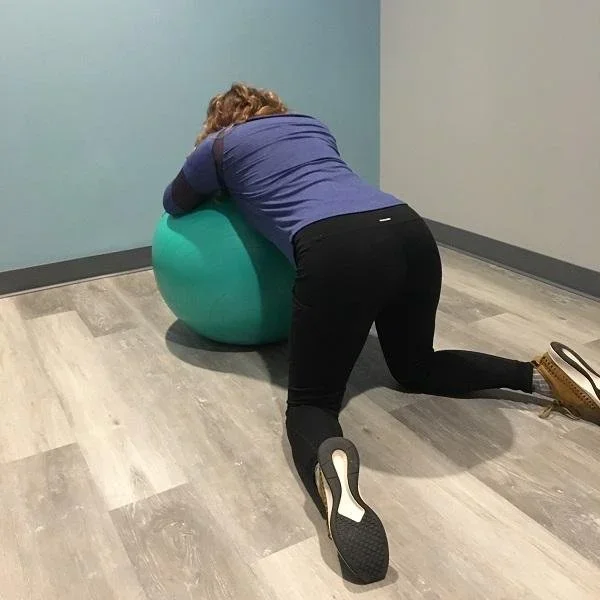
Rocking in/out of Child’s Pose: knees together and feet wide, supported by a birthing ball if needed.
Lying on one side with a ball or pillow between the ankles
Takeaway
Labor is a dynamic process, and moving your body intentionally can:
Help your pelvis open efficiently
Support your baby’s descent
Make the experience more comfortable.
Using tools like a birthing ball, sling, or peanut ball, and incorporating both symmetrical and asymmetrical movements, can make a big difference!
Work with a Physical Therapist to Prepare for Birth
If you live in Portsmouth, New Hampshire or the Seacoast of New Hampshire and want to work with a physical therapist that is experienced in birth preparation, we would love to help you at Anchor Physical Therapy & Performance. We work with women through all phases of pregnancy and postpartum so they can feel good and empowered throughout the process.
New Hampshire and Massachusetts Residents: we offer virtual physical therapy sessions if coming in person is too challenging. A lot can still be accomplished in a virtual session.